How Does Your Thyroid Affect Your Period
How underactive and overactive thyroid conditions influence menstruation, and what you can do about it.
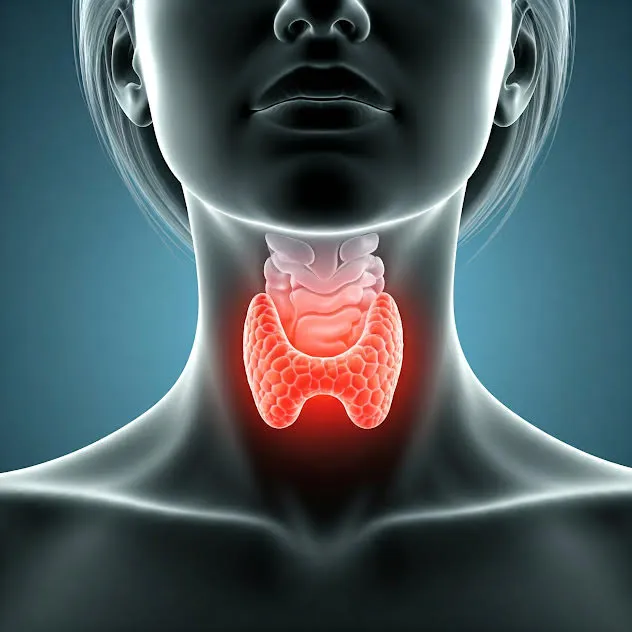
Thyroid disorders can significantly affect a woman's menstrual cycle, fertility, and overall reproductive health. This article explores how underactive (hypothyroidism) and overactive (hyperthyroidism) thyroid conditions influence menstruation.
Hypothyroidism and menstrual cycles
Women with hypothyroidism often experience heavier periods (menorrhagia), longer cycles (periods extending beyond the typical 28-day range), irregular cycles, and increased cramping.
The mechanism: hypothyroidism disrupts the production and balance of reproductive hormones, alters the sensitivity of ovaries to follicle-stimulating hormone (FSH) and luteinizing hormone (LH), and can cause anovulation, leading to estrogen breakthrough bleeding.
Hyperthyroidism and menstrual cycles
Hyperthyroidism tends to cause lighter periods, shorter cycles (more frequent periods), irregular cycles, and in severe cases amenorrhea (periods stopping altogether).
The mechanism: hyperthyroidism elevates levels of sex hormone-binding globulin (SHBG), alters the production and metabolism of estrogen and progesterone, and can interfere with ovulation.
Research findings
- A recent study found that nearly half of women with menstrual problems also had thyroid issues, most of them with an underactive thyroid.
- Research in the International Journal of Reproduction, Contraception, Obstetrics and Gynecology revealed that menstrual irregularities were present in 23.8% of women with hypothyroidism, compared to 8.4% in healthy controls.
- Both hyperthyroidism and hypothyroidism can lead to menstrual disorders, with hypothyroidism more commonly associated with heavy menstrual bleeding.
Solutions and prevention
- Regular thyroid screening for women experiencing menstrual irregularities.
- Proper treatment, addressing thyroid dysfunction through medication can often resolve menstrual issues.
- Dietary considerations, for hypothyroidism, ensure adequate iodine and consider selenium-rich foods; for hyperthyroidism, limit iodine and increase calcium and vitamin D.
- Lifestyle modifications, stress management, regular exercise, and adequate sleep to support hormonal balance.
- Consult an endocrinologist for personalized treatment and monitoring.
Conclusion
Thyroid disorders significantly impact menstrual health, affecting cycle regularity, flow, and symptoms. Women experiencing menstrual irregularities should consider thyroid function as a potential underlying cause. Early detection and proper management can effectively restore normal menstrual patterns and improve overall reproductive health.
← Back to The Journal