Your First Gynaecologist Appointment: What to Expect
Nervous about your first gynaecologist visit? Here is a calm, practical walkthrough of what happens, how to prepare, and how to make sure you are heard, even in a short appointment.
TL;DR: A first gynaecologist visit is mostly a conversation. Your doctor asks about your periods, symptoms, and history, then explains any tests. A pelvic exam is not always needed at a first visit, and you can ask questions or decline anything you are unsure about. Prepare by tracking your symptoms, writing down your questions, and bringing a clear summary. You have the right to confidentiality, to request a female clinician or a chaperone, and to understand every step before it happens.
If the idea of your first gynaecologist appointment makes you tense, you are in good company. Many women put it off for years, unsure what will happen, worried it will be uncomfortable, or half-expecting to be dismissed. The good news is that a first visit is far gentler than most people imagine, and knowing what to expect takes a lot of the fear out of it.
This is a walkthrough for an adult woman going for the first time. We will cover why and when to go, what happens in the room, how to prepare, and, just as important, your rights and how to be heard when the appointment feels rushed.
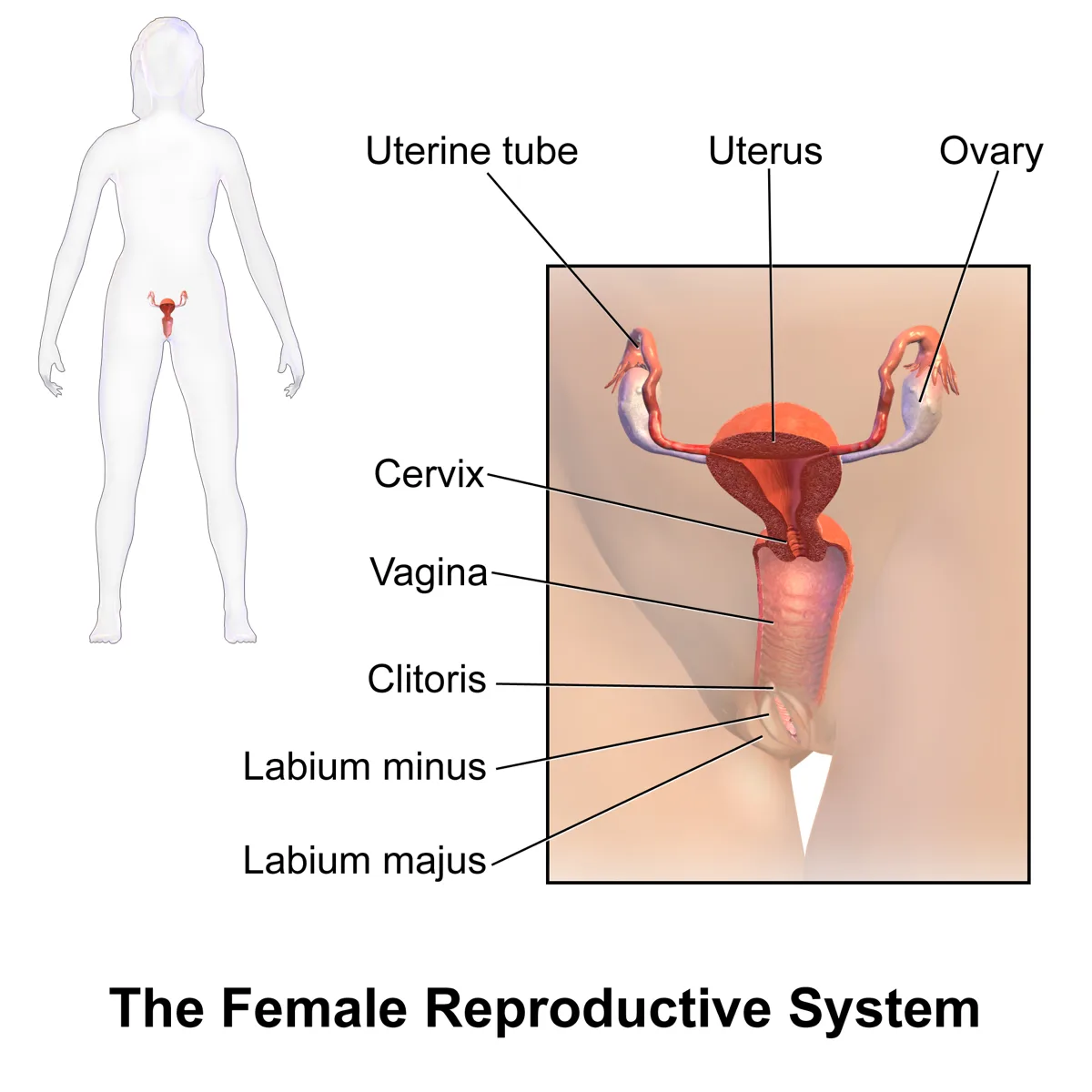
A quick map of the female reproductive system. Knowing the names of these parts makes it easier to describe what you are feeling. Illustration by Blausen Medical (BruceBlaus), CC BY 3.0.
When Should You See a Gynaecologist?
There is no single right age, and you do not need a crisis to book a visit. A gynaecologist (or a general practitioner offering women's health care) looks after everything from periods to fertility, contraception, and screening.
Reasons to go include:
- Periods that worry you. Very heavy bleeding, irregular or missing periods, or pain that disrupts your life are all worth discussing. Our guide on why periods become irregular explains what can be behind them.
- Pain or discomfort. Pelvic pain, pain during sex, or persistent changes in discharge deserve a proper look rather than years of guessing.
- Contraception and family planning. To start, change, or ask questions about birth control.
- Screening and prevention. Cervical screening and general reproductive-health checks. See our women's health screening checklist for what belongs at each stage of life.
- Understanding your own body. Sometimes you simply want a baseline and someone to answer questions. That is a perfectly good reason.
Professional bodies suggest an early women's health visit in the mid-to-late teens or early twenties, then regular reviews after that (ACOG). If you are past that age and have never been, there is no lost ground to make up. The right time to go is now.
What Happens at a First Gynaecologist Visit
Most of a first appointment is talking. The clinician needs to understand your health before deciding whether any examination is useful, so expect questions before anything else.
The history. You will be asked about your cycle (when it started, how long it lasts, how heavy it is), your last period, any pain or unusual symptoms, sexual history if relevant, past pregnancies, medications, and family history of conditions like cancer or endometriosis. These questions can feel personal, but they are routine and confidential, and open answers help you get the right care.
The physical check, if needed. Depending on why you came and your age, the visit may include a general check such as blood pressure, and sometimes an abdominal or pelvic examination. At a first visit, many women need no internal examination at all. If one is recommended, the clinician should explain why and ask your permission first (ACOG).
Tests and screening. Cervical screening (a smear test) is usually offered from a set age, not at every first visit, so it may or may not apply to you. In the UK, for example, routine cervical screening starts at 25 (NHS). Your clinician will tell you what is due and why.
What a Pelvic Exam Involves
The pelvic exam is the part most people dread, usually because they have never had it explained. It is quicker and less dramatic than the anxiety suggests.
If it is needed, you undress from the waist down and lie back with your knees bent. The clinician may look at the external area, then gently insert a lubricated instrument called a speculum to see the cervix, and sometimes use gloved fingers to feel the uterus and ovaries. It can feel odd or briefly uncomfortable, but it should not be sharply painful. If it hurts, say so, and the clinician can adjust or pause (ACOG).

Cross-section of the female reproductive organs. During a pelvic exam, the clinician is checking these structures. Illustration by CDC and Mysid, public domain, via Wikimedia Commons.
The point worth holding onto: a pelvic exam is not automatic. It happens when there is a reason, with your understanding and consent, and you can ask questions at any point.
How to Prepare for Your Appointment
A little preparation turns a rushed visit into a useful one. You do not need to do anything elaborate.
- Track your symptoms beforehand. Note your cycle length, the date of your last period, and any pain, bleeding, or discharge changes, with rough dates. Our guide on how to track your period walks through simple methods, and understanding your cycle helps you describe patterns clearly. Written notes are harder to wave away than "I think it happens sometimes."
- Write down your questions. It is easy to forget them under pressure. A short list keeps you on track.
- Bring the practical things. Any medications or supplements you take (or their names), your insurance or clinic details, and a note of previous surgeries or conditions.
- Wear something comfortable. A two-piece outfit makes any examination easier.
- You can bring someone. A friend or family member in the waiting room, or beside you if you prefer, is entirely reasonable.
If keeping all of this in one place feels like a lot, Asele's Health Brief pulls your tracked cycle and symptoms into a clear, one-page summary you can hand over, so even a ten-minute appointment starts with the full picture instead of a scramble.
Your Rights in the Room
Feeling nervous can make it easy to forget that you are in charge of what happens to your body. You are not there to be processed. You have clear rights.
- Confidentiality. What you share is private and protected. This includes sexual history and contraception.
- A chaperone. You can ask for a chaperone, a second staff member present during any examination, and clinics should offer one. It is a standard request, not an awkward one (RCOG).
- A female clinician. You can ask to be seen by a woman. Availability varies, but it is reasonable to ask, and worth asking when you book rather than on the day.
- The right to understand and to decline. Every test and examination should be explained, and you can ask questions, ask for a pause, or decline. Consent is yours to give, and yours to withdraw.
None of these requests make you difficult. They are part of good care.
How to Be Heard in a Short Appointment
For many African women and women across the diaspora, the hardest part is not the exam. It is being taken seriously. Period pain gets brushed off as normal, reproductive health carries stigma that makes it hard to speak up, and appointments are often short. Being dismissed once can put someone off going again for years.
A few things that help you get heard:
- Lead with your main concern. Say the most important thing first, plainly: "I am here because my periods are so painful I miss work."
- Bring evidence, not just feelings. A tracked record of symptoms shifts the conversation from "I think" to "here is the pattern." This is where a prepared summary earns its place.
- Name what you want. It is fine to say, "I would like this looked into," or "Could we test for a cause?" Asking directly often changes the direction of the visit.
- Ask what the plan is for. If you are given a treatment, ask what it is treating and how you will know if it is working.
- Seek a second opinion if you are brushed aside. If your symptoms continue and your concerns are dismissed, asking someone else is looking after yourself, not being a nuisance.
Self-advocacy is a skill, and it gets easier. Our piece on advocating for yourself in women's health goes deeper on how to walk in prepared and walk out with answers.
Do I need a pelvic exam at my first visit?
Not necessarily. Many first visits involve only a conversation about your history and symptoms, with no internal examination at all. A pelvic exam is done when there is a specific reason, such as symptoms that need investigating or screening that is due, and the clinician should explain why and ask your permission first. You can always ask questions or decline if you are unsure.
What should I bring to a gynaecologist appointment?
Bring the date of your last period and a note of your cycle and any symptoms, a list of medications or supplements you take, your clinic or insurance details, and any questions you have written down. A clear one-page summary of your tracked symptoms, such as the Asele Health Brief, helps a short appointment cover more ground. Comfortable clothing makes any examination easier.
Can I ask for a female doctor or a chaperone?
Yes to both. You can request a female clinician when you book, and availability permitting, the clinic will try to accommodate it. You can also ask for a chaperone, a second staff member present during any examination, and clinics should routinely offer one. These are standard, reasonable requests, and asking for either does not make you a difficult patient.
Will I have a cervical screening at my first appointment?
Not always. Cervical screening (a smear test) usually begins from a set age rather than at every first visit, so whether it applies depends on your age and country. In the UK, routine screening starts at 25. Your clinician will tell you what screening is due for you and explain what it involves before anything is done.
References
- American College of Obstetricians and Gynecologists. "Your First Gynecologic Visit." acog.org
- American College of Obstetricians and Gynecologists. "The Well-Woman Visit." acog.org
- American College of Obstetricians and Gynecologists. "Pelvic Exams." acog.org
- American College of Obstetricians and Gynecologists. "Cervical Cancer Screening." acog.org
- NHS. "Cervical screening." nhs.uk
- Royal College of Obstetricians and Gynaecologists. "Patient information." rcog.org.uk
- World Health Organization. "Cervical cancer." who.int
- Eunice Kennedy Shriver National Institute of Child Health and Human Development (NICHD). "Menstruation and Menstrual Problems." nichd.nih.gov
- Office on Women's Health (womenshealth.gov). "Pap and HPV tests." womenshealth.gov
Image credits
- Female reproductive system illustration: Blausen Medical (BruceBlaus), from "Medical gallery of Blausen Medical 2014," WikiJournal of Medicine, CC BY 3.0, via Wikimedia Commons (anatomy).
- Reproductive organs cross-section: CDC and Mysid, public domain, via Wikimedia Commons (scheme).
Related posts on Asele:
← Back to The Journal