Psychological Safety in the Workplace with Veroniek Vermeulen | Blush & Bloom Podcast | Ep. 54
Veroniek Vermeulen of Silatha on psychological safety in the workplace: vulnerable leadership, menopause at work and change that lasts.
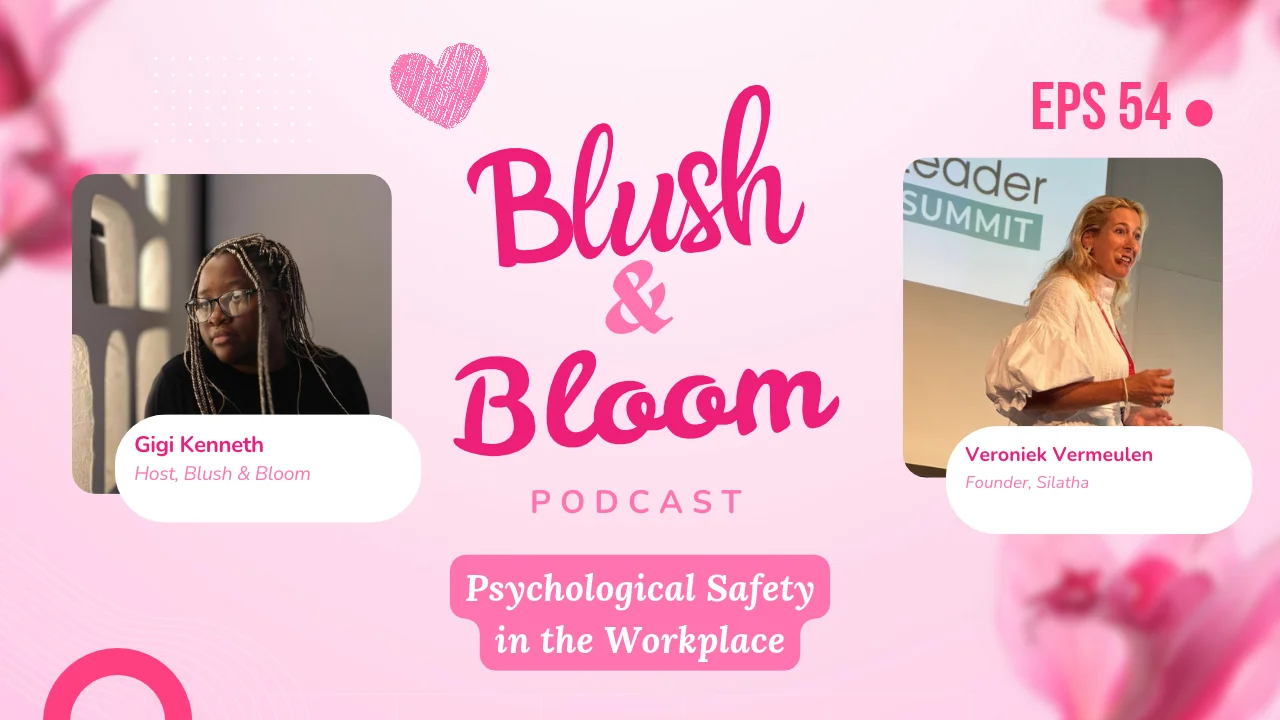
On this week's Blush & Bloom, Gigi Kenneth sits down with Veroniek Vermeulen, founder of Silatha, to talk about psychological safety in the workplace. Veroniek's argument is clear: when people dare to speak up about mistakes, ideas or health, teams perform better, and topics like menopause and the menstrual cycle stop being something women learn to hide.
In This Episode, We Cover:
- Veroniek's path from engineering and two decades in a male-dominated corporate world to founding Silatha
- What psychological safety in the workplace means, and the common misunderstanding about it
- Why vulnerability is a leadership strength, and how founders can build feedback loops from day one
- How managers can open conversations about menopause and hormonal health without making anyone uncomfortable
- Why lasting culture change takes months of practice, not a single workshop
From "one of the guys" to founding Silatha
Veroniek trained as an engineer and spent more than 20 years in corporate roles, in an environment she describes as very male dominated. For a long time she took "you're one of the guys" as a compliment. Over time she realised she had become very good at adapting to that world rather than fitting into it. That started a long journey of figuring out who she was, including time spent in monasteries. As she became more open about her own questions, friends opened up too, about fertility journeys, miscarriage, endometriosis and PCOS. It showed her how many women struggle to fit into a workplace built around a 24-hour rhythm, and it became the reason Silatha exists.
What is psychological safety in the workplace?
Psychological safety is often mistaken for simply being kind to each other. Veroniek defines it as an environment where people dare to speak up without fear of negative consequences, whether that is a mistake they made, a bold idea or the fact that they are going through menopause. She points to Google's research into high-performing teams, which found psychological safety mattered more than a charismatic leader or the intelligence of the team.
How can leaders create psychological safety?
It starts at the top, with vulnerability. In Veroniek's words, "vulnerable is not being weak." Leaders can share mistakes and worries, which shows their teams it is safe to do the same and turns mistakes into learning. It also means listening to understand, asking questions, remembering what people tell you and treating them as people rather than numbers. As she puts it, "It's not your technology that will make your company successful, it's the people behind that technology."
What can founders do from day one?
For founders building a company from scratch, Veroniek recommends feedback loops that go both ways: regularly asking people how you are doing as a manager, and acting on what they say. Trust can be broken by small things and takes a long time to rebuild. She also encourages companies to measure and reward managers who bring out the best in their teams, alongside sales and productivity.
How do you start conversations about menopause at work?
Veroniek's advice is to create a safe space and explain why you are asking, rather than suddenly asking a team about their cycles in a meeting. A leader can open the door by sharing something personal, then make it clear they are available to listen if anyone is struggling with their health. Nobody should feel pressured to share. The goal is an environment where uncomfortable things can be discussed when people choose to. She also raises andropause, a drop in testosterone that some men experience, which most people have never heard of.
Why one workshop is not enough
Behaviour does not change in a two-day workshop. Silatha's programmes run for six months to a year, combining e-learning people complete in their own time with a monthly team game that gets colleagues having those uncomfortable conversations together. Veroniek also shares the story of a CEO who, during a sudden drop in sales, offered everyone unpaid leave instead of letting a few people go, and watched the team trade weeks off to support each other. At the time of recording, Silatha was expanding into the Middle East, with a focus on women's health.
FAQ
Who is Veroniek Vermeulen? Veroniek Vermeulen is the founder of Silatha, an Amsterdam-based company that helps organisations build psychologically safe, inclusive workplaces. She has an engineering background, more than 20 years of corporate experience and is a certified coach.
What does Silatha do? Silatha runs long-term programmes that help teams build psychological safety, combining e-learning, monthly team activities and workplace tools, including sessions on taboo health topics such as menopause.
Why does psychological safety matter for women's health at work? When people feel safe to speak up, women can raise health issues like menopause, endometriosis or cycle-related symptoms without fear, instead of hiding them to fit a workplace designed around a 24-hour rhythm.
Is psychological safety just about being nice? No. It means people can speak up about mistakes, ideas or personal struggles without fearing negative consequences. Kindness helps, but the core is being able to speak openly without fear.
Listen and connect
Listen to the full conversation on Spotify, Apple Podcasts, or YouTube. Connect with Veroniek Vermeulen on LinkedIn and learn more about Silatha at silatha.com or on LinkedIn. Explore more conversations on the Blush and Bloom podcast hub and at Asele.
This episode is for general informational purposes and does not constitute medical, legal, or regulatory advice.
← Back to The Journal